China's trade surplus passes $1 trillion again, and October's imports grew faster than its exports
Customs data show a $1.04 trillion surplus after ten months, helped by chips and AI hardware. Imports rose 41.6%, which shrank the monthly gap, not the record.
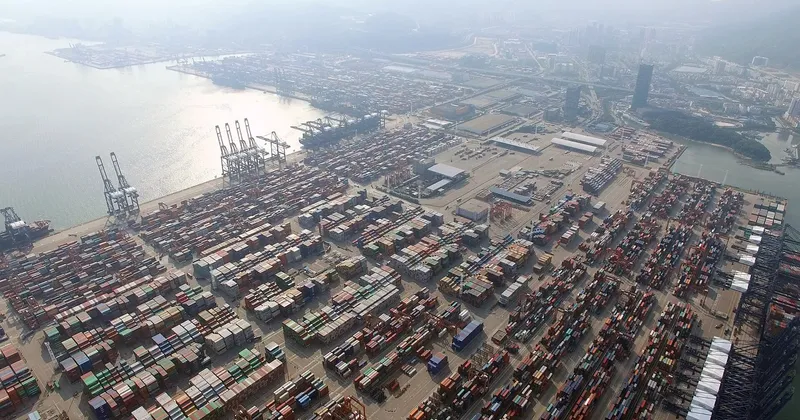
China sold $412.3 billion of goods abroad in October, 35.2% more than a year earlier, and bought $307.1 billion, 41.6% more, according to customs figures released on 10 November. The ten-month trade surplus has now reached $1.04 trillion. That is about a month earlier than the same line was crossed in 2025, a year that ended with a record $1.2 trillion.
The headline looks like more of the same. The detail is less tidy.
The gap narrowed, the record did not
Imports outran exports, so the monthly surplus shrank to $105.3 billion from $133.5 billion in September, the Associated Press reported. AP attributes part of the import jump to a recovery in crude oil shipments from the Persian Gulf, which means some of the “extra” imports are a price and logistics story rather than a sudden burst of Chinese appetite. Exports still beat the 33.25% forecast in a poll of economists run by the data provider Wind, the South China Morning Post noted.
At this pace, 2026 is on course to beat last year’s $1.2 trillion. One smaller month does not change that arithmetic.
What is being shipped
Semiconductor exports rose 137.1% by value and auto exports 37.6%, AP said. AFP ties the boom to worldwide demand for AI-related products: computer chips, data-center servers and networking equipment. The same wire story describes exports as a key prop for Beijing while the property sector stays weak.
Sales to the United States rose 32.9% in October, but from a low base after the 2025 tariffs hit that trade. Sales to the European Union rose 24.3% in October and 17.2% across January to October.
Where it lands
The surplus is not spread evenly. AP puts China’s January–October surplus with the US at about $266.5 billion. AFP says the surplus with the EU reached $310.7 billion over the same period, up from $241.6 billion a year earlier. AP adds that the EU ran a deficit of roughly $410 billion with China in 2025, more than $1.1 billion a day.
Brussels has noticed. AFP reports that talks in Beijing last month between EU trade chief Maros Sefcovic and his Chinese counterpart Wang Wentao produced an agreement to limit exports of hybrid vehicles to Europe. Capital Economics’ Nguyen Hoang Nam, quoted by AP, argues that EU trade measures cover only a small part of what China sells.
Two readings of the same number
Economists disagree about what the surplus says about China.
- Strength. Zhiwei Zhang of Pinpoint Asset Management told AFP that exporters have been the key driving force behind China’s economy this year, and that he expects them to keep performing well for the foreseeable future.
- Weakness. Alicia García-Herrero of Natixis argues the surplus reflects overcapacity, excess domestic savings and weak domestic demand, and that the situation “is not sustainable,” in AP’s account.
Both can be true. AFP notes that China is leaning on exports to reach its 2026 growth target of 4.5% to 5.0%, the lowest in decades, while consumption is sluggish and inflation sits well below the official target of about 2%. A view from the shop floor is in the AP piece too: Cinders Zhou, who sells eyewear for a manufacturer in Zhejiang, says heavy sameness among products “has forced everyone to compete on price.”
What could change it
Dave Chia of Moody’s Analytics expects exports to stay strong this year, led by electronics and autos. His warning is conditional: if the AI boom slows or turns into a correction, lower chip prices and smaller shipping volumes would hit exports hard. That makes China’s trade position partly a bet on the investment plans of data-center builders abroad.
Politics sits next to the numbers. A two-month extension of the US–China trade truce, to January, has given exporters some relief, AP reports, and Donald Trump and Xi Jinping are expected to meet on the sidelines of the APEC summit in Shenzhen next week. The European side is moving on a separate track.
One caution from AP is worth keeping: Chinese customs figures and those of partner countries often differ, so the exact size of any bilateral surplus depends on whose books you read. The direction, though, is not in dispute. A year after reaching $1 trillion in November, China reached it in October, and neither the AI hardware cycle nor the pressure from trading partners is likely to settle before the next release in December.
Sources
- Associated Press: China's trade surplus surpasses $1 trillion for a 2nd straight year, as exports surge 35% click2houston.com
- AFP via Kuwait Times: China's 2026 trade surplus tops $1 trillion by October kuwaittimes.com
- South China Morning Post: China's imports outpace exports in October as Beijing seeks to address imbalance scmp.com
More in Economy
-
Australia's central bank lifts rates to 4.85% on a 6-3 vote, and the minutes show what the three feared
The Reserve Bank of Australia made its fifth increase of 2026. Its minutes set out why six members raised the cash rate and why three wanted to wait.
-
ASEAN signs its first binding digital economy agreement, and most of the work comes after the signatures
The Manila agreement sets rules on e-payments, data flows and paperless trade, enters into force about 180 days after signing, and lets ready members move first.
-
India's inflation hits 6.09% in October, past the central bank's ceiling, with onion prices more than doubled
Retail inflation rose from 5.54% to 6.09% and food inflation to 8.94%. The central bank had warned of a 6% quarter; its minutes show a divided committee.