Australia's central bank lifts rates to 4.85% on a 6-3 vote, and the minutes show what the three feared
The Reserve Bank of Australia made its fifth increase of 2026. Its minutes set out why six members raised the cash rate and why three wanted to wait.
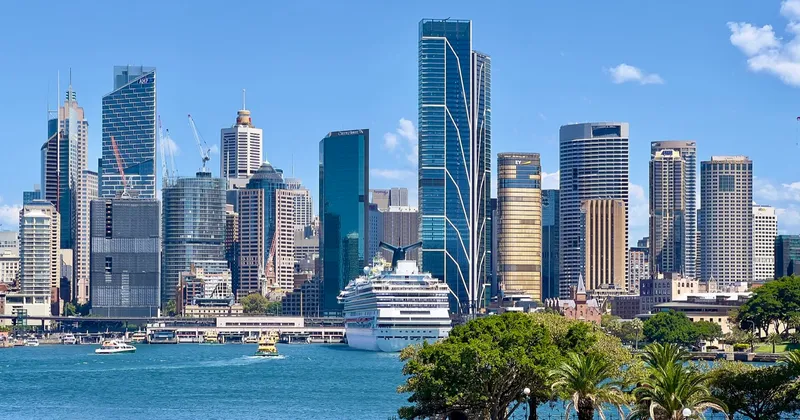
The Reserve Bank of Australia raised its cash rate by 25 basis points to 4.85% on 3 November, the highest level since 2008. It was the fifth increase of the year, and this time the board did not agree: six members voted to raise, three to hold at 4.60%. The minutes of that meeting, now public, are more useful than the headline, because they put the two camps’ reasoning side by side.
Where the numbers stand
Reuters counts 125 basis points of tightening in 2026, which more than reverses the 75 points of easing delivered in 2025. Inflation for the September quarter came in above target and above what the bank’s staff expected, in both headline and underlying terms. According to the minutes, retail fuel prices drove most of the surprise on the headline, while market services inflation was also stronger than forecast, which staff read as a sign of tighter domestic capacity.
Oil is the backdrop. The minutes put crude and refined product prices roughly 20% to 25% higher than in August because of the Middle East conflict. Staff assume about two-thirds of the extra costs will pass through to underlying inflation, and the forecasts assume oil prices fall back over the next two years, an assumption the board itself flags as depending on some resolution of the conflict.
The labour market gives the other camp its evidence. Unemployment has risen by about half a percentage point over six months. Reuters puts the rate at a five-year high of 4.7%, and says the housing market is on track for its biggest downturn in four decades.
The case for raising
The six members who voted to lift the rate judged that forward-looking inflation pressures had risen and that upside risks remained. They did not consider the cash rate clearly restrictive, given that the neutral rate may be higher than thought and inflation has run above target for a long time. They also pointed to signs of resilience, including continued employment growth.
The decisive argument was about which mistake costs more. In the minutes’ wording, the larger worry was “the risks of unintentionally leaving monetary policy insufficiently restrictive.” Leaving policy too loose and letting inflation expectations rise, the majority concluded, was worse than tightening too far.
The case for waiting
The three dissenters wanted more time to see how 100 basis points of tightening already delivered would work through the economy; in their view “it was prudent to leave more time to assess.” They put more weight on downside growth risks, including the housing downturn and rising unemployment, and less on upside inflation risks. The minutes say they worried the economy could be near a sharper downturn.
What the staff forecasts imply
The new forecasts push the timetable out. Headline and underlying inflation are now expected to stay above 3% until late 2027 and to return to the 2.5% midpoint of the target range only in mid-2028, later than the August projection. Unemployment is forecast to reach 5.1% by the end of 2028, about a quarter of a point higher than before. Staff also raised their estimate of the lowest unemployment rate the economy can sustain without adding to inflation, so they now see more capacity pressure in 2026 than they did.
There is also a calendar quirk to watch. Headline inflation is expected to be significantly higher in October, the minutes say, because a household subsidy from the previous year drops out of the annual comparison. That is a base effect, not a new price shock, but it will make the next headline figure look worse than the underlying trend.
Signals about what comes next
Two details point toward a pause. Reuters reports that the board dropped its earlier reference to raising rates further if needed, replacing it with a statement that it “will continue to do what it considers necessary” to return inflation to target. Markets expect a hold in December after the split vote, and two analysts quoted by Reuters agree. Katherine Palmer of BlackRock Australia says the challenge is that inflation “remains sticky just as growth momentum is beginning to slow.” Marcel Theliant of Capital Economics thinks the bank is probably done and “probably won’t loosen policy until the end of next year.”
Neither forecast is a commitment from the bank. The board’s own forecasts rest on an oil path it admits may not hold, so another increase cannot be ruled out.
The vote itself was less of a surprise than the split. Reuters says 30 of 32 economists polled expected a hike and markets priced an 88% chance. What the market had not priced was a board that is no longer of one mind, and the December meeting will show whether the three dissenters or the six set the tone.
Sources
More in Economy
-
ASEAN signs its first binding digital economy agreement, and most of the work comes after the signatures
The Manila agreement sets rules on e-payments, data flows and paperless trade, enters into force about 180 days after signing, and lets ready members move first.
-
India's inflation hits 6.09% in October, past the central bank's ceiling, with onion prices more than doubled
Retail inflation rose from 5.54% to 6.09% and food inflation to 8.94%. The central bank had warned of a 6% quarter; its minutes show a divided committee.
-
China's trade surplus passes $1 trillion again, and October's imports grew faster than its exports
Customs data show a $1.04 trillion surplus after ten months, helped by chips and AI hardware. Imports rose 41.6%, which shrank the monthly gap, not the record.