A 47-million-year-old owl with a cockroach in its stomach suggests early owls hunted by day
A new fossil from Germany's Messel Pit shows an owl that lacked the wing features for silent flight, narrowing when owls may have turned nocturnal.
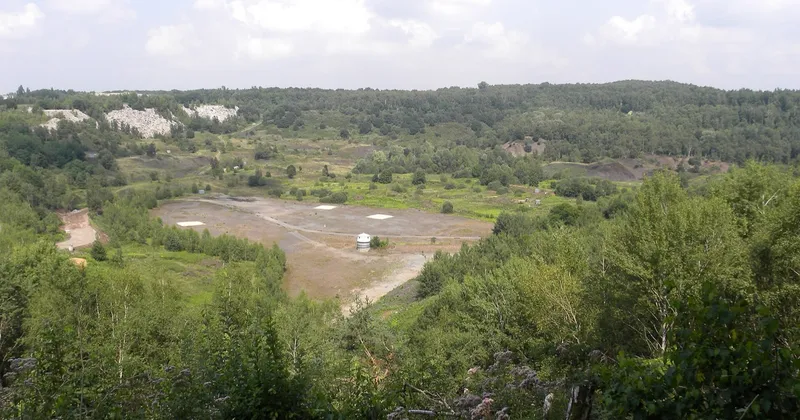
The last meal of a small owl that died in a forest lake 47 million years ago was a cockroach. That detail, preserved in the stomach region of a fossil dug up in 2025, is the best clue yet that early owls were not yet creatures of the night.
The bird, named Masillastrix blattophaga by a team led by Gerald Mayr at the Senckenberg Research Institute in Frankfurt, comes from the Messel Pit, a UNESCO World Heritage fossil site near the city. The species name points at the diet: blattophaga roughly means cockroach eater. The paper appeared in Current Biology under the title “Evidence for diurnal habits in an exceptionally preserved Eocene owl.”
A fossil with feathers and a last meal
The owl is tiny, about 12 centimetres long, and dates to the Middle Eocene. According to the Senckenberg release, the skeleton is complete apart from the skull, and the wing and tail feathers survive. Mayr described it as exceptionally well preserved. It is only the second owl species known from Messel, whose sediments formed in a forested setting.
Sonja Wedmann, who heads the Messel excavation for Senckenberg, helped identify the insect remains. The team recognised them as cockroach wing fragments from the wing shape and venation, and a very similar cockroach, better preserved, turned up a few metres from the owl. The cockroach in the owl’s stomach had a greenish-blue iridescence.
Why a cockroach matters
Iridescent wings in living insects are associated with daytime activity. If the owl’s last meal was an iridescent insect, the simplest reading is that the owl was hunting while that insect was active. IFLScience notes the remains resemble modern jade cockroaches. According to Bild der Wissenschaft, the authors say these are the first identifiable insect remains ever found as the last meal of a fossil bird.
The stomach contents are one line of evidence. The body offers two more.
- Feathers. Modern owls have a fringe along the leading edge of the wing feathers that dampens flight noise. The fossil’s feathers lack it, which suggests silent flight had not evolved yet.
- Wing bone. The upper arm bone, the humerus, is much shorter and sturdier than in living owls, another sign that the wings were not yet specialised for quiet hunting.
Dating the switch to night
Owls today are the great nocturnal hunters among birds, but nobody knows when that began. The fossil record of owls is sparse, and most species are described from a few isolated bones; Mayr said it is still unknown when owls shifted from day to night.
This fossil sets one end of the window. The earliest owl with modern-type humerus proportions comes from France and is about 35 million years old. The authors suggest the shift to nocturnal habits happened somewhere between the Middle and Late Eocene, roughly 47 to 35 million years ago. That is still a span of about twelve million years, so the question is narrowed rather than settled.
How firm is this?
The authors themselves are careful. They say they cannot be completely certain and that the owl probably hunted during the day, in IFLScience’s account. Several limits are built into the evidence:
- It rests on a single specimen.
- The link between iridescent insects and daytime activity is a correlation drawn from living species, not a direct observation of this bird.
- The date range comes from comparing this fossil with a thin set of other owl fossils, so the transition point is uncertain.
- The study does not explain why owls switched to the night. Bild der Wissenschaft mentions changes in available prey, such as small nocturnal rodents, as one idea, and notes it has not been shown.
For the Senckenberg team, the value of Messel is the fine detail. Wedmann credits the site’s exceptional preservation environment for keeping features intact for more than 47 million years. A fossil with its feathers and last meal gives researchers something most owl finds cannot: a snapshot of how one bird lived on a particular day. Whether more Messel owls turn up with similar signs will decide if this one was typical or an outlier.
Sources
More in Science & Climate
-
El Niño is still strengthening, and NOAA now puts a historic event at about 60%
NOAA's 12 November update and NASA satellite maps both point to an El Niño that rivals 1997-98. Neither agency can yet say where the worst effects will land.
-
Fossil CO2 is set to dip 0.4% in 2026, against cuts of about 6% a year needed for 1.5°C
The Global Carbon Budget projects a small fall in fossil CO2 this year, driven by an oil shock. UNEP's gap report shows how far that is from what 1.5°C needs.
-
Swiss glaciers lost 5.5% of their ice in a year and nearly a fifth since 2021
A snow-poor winter and a record-hot summer left Swiss ice bare. Monitors say 2.2 trillion litres of meltwater ran off between July and September.