Russia sends 70 businessmen to Kabul, and the Taliban's pitch is fertilizer plants, railways and special economic zones
A Russian deputy prime minister brought a business delegation to Afghanistan. The reported trade total is $349 million, but no contracts have been disclosed.
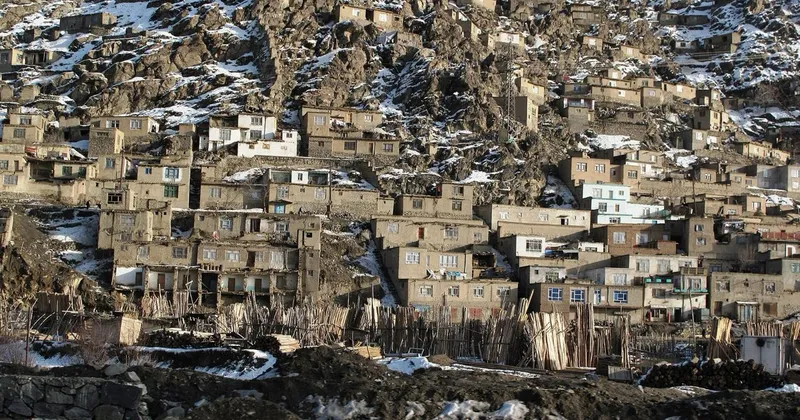
A Russian delegation led by Deputy Prime Minister Alexei Overchuk arrived in Kabul on Thursday, 12 November, for trade and investment talks with the Taliban government. It was greeted with a guard of honour. Overchuk said the group includes more than 70 businessmen from dozens of Russian companies, many of which already operate in Afghanistan.
The visit is a test of what Russia’s recognition of the Taliban government, granted in July 2025, can produce in commercial terms.
Who met whom
According to the Associated Press, Overchuk met Prime Minister Mohammad Hasan Akhund and Deputy Prime Minister for Economic Affairs Abdul Ghani Baradar. Foreign Minister Amir Khan Muttaqi attended the meeting with Akhund. Euronews, whose Persian service covered the visit, lists the same three Afghan officials.
Overchuk said the companies in his delegation work in transportation, logistics, agriculture and pharmaceuticals. Most of the detail about what was discussed comes from the Afghan side, in a government account relayed by the AP, and from Overchuk’s own remarks. No independent observer was quoted in either report.
The Afghan offer
Baradar presented Afghanistan as a place to invest. He cited its strategic location, rich resources and a working-age population of 24 million, and invited Russian firms into several areas:
- mineral extraction and factory development;
- agriculture and livestock;
- railway and road construction;
- infrastructure and special economic zones.
He also asked for help in getting Afghan products onto Russian markets, and for Russian assistance in lowering transport and transit costs. Landlocked Afghanistan depends on neighbours’ routes, so the second request may be the more consequential one. Neither report says what Russia offered in reply.
The Russian interest
Fertilizer is the specific item both reports mention. Overchuk said Afghanistan is interested in Russian chemical fertilizers, and in building fertilizer plants inside the country. That would turn a product Russia exports into a manufacturing investment on Afghan soil, which is a bigger commitment than a shipment of bags.
On trade, Overchuk said turnover between the two countries more than doubled in the first eight months of 2026, to over $349 million. The AP attributes the figure to Overchuk as quoted by the Afghan government, and Euronews reports it as his statement. It is an official claim from one side. Neither report gives the comparable 2025 total, a breakdown by product, or a split between exports and imports, so the pace of growth can be stated but not tested.
Recognition, and what it has bought
Russia recognised the Taliban government in July 2025. It remains the only country to have done so since the group took power in August 2021, after the US-led withdrawal. The AP describes Kabul as largely isolated internationally, with a struggling economy, which is why it wants foreign investment and new trade routes. Other states have held high-level talks with the Taliban and set up some diplomatic and economic ties, the AP says, naming China and the United Arab Emirates, but none has followed Moscow in formal recognition.
That gives Moscow an unusual position. It is the Taliban’s only formal diplomatic partner, and it is now the one trying to turn that status into contracts. For Kabul, a business delegation of this size is a way to show that recognition has practical value.
What the reports leave out
The gaps are as informative as the figures. Neither report mentions a signed contract, an investment amount, a named project or a date for any of the proposed plants and railways. Nor do they describe the legal and banking arrangements that Russian companies would need in order to do business in Afghanistan. The AP piece carries no criticism or reaction from other governments, and Euronews carries none either.
So the visit is best read as an opening position. The Taliban want capital and market access, and Russia wants a foothold in a market it has just recognised. What matters next is whether any of the 70 businessmen’s companies announce a project with a number attached.
Sources
More in World
-
Exxon signs a non-binding deal to look at Venezuelan oil fields, 19 years after it was pushed out
A memorandum signed in Caracas gives ExxonMobil one year of exclusivity to assess seven areas. It commits no capital, and the company lists conditions.
-
The UN Security Council renews Yemen sanctions by consensus, a year after Russia and China abstained
The Council extended asset freezes and travel bans on Houthi targets to November 2027 and aimed at drone and missile supplies, without a recorded vote.
-
The EU and Nigeria sign a readmission deal after a decade of talks, and what Abuja gets is still open
The first EU-Nigeria agreement on returning migrants was signed in Abuja. Parliament and Council must still approve it, and the promised aid is not itemised.