The UN Security Council renews Yemen sanctions by consensus, a year after Russia and China abstained
The Council extended asset freezes and travel bans on Houthi targets to November 2027 and aimed at drone and missile supplies, without a recorded vote.
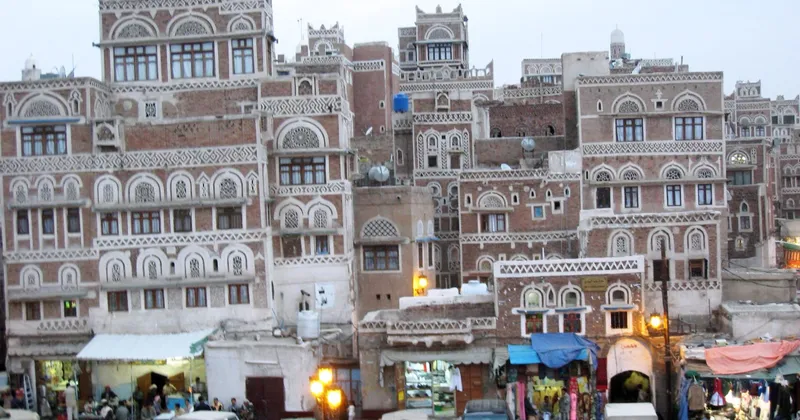
The UN Security Council renewed its Yemen sanctions regime on Thursday, 12 November, without a recorded vote. The text, drafted by the United Kingdom, keeps targeted asset freezes and travel bans on designated Houthi-linked individuals and entities until 14 November 2027, and it takes aim at the supply chain that feeds the group’s drones and missiles.
The unanimity is the news. A year ago the same renewal passed 13-0 with Russia and China abstaining.
What the resolution does
Gulf News, citing Security Council Report, says the resolution was adopted by consensus. Its main provisions, as Gulf News describes them:
- It renews the asset freezes and travel bans under the sanctions regime created by Resolution 2140, until 14 November 2027.
- It strengthens implementation of the arms embargo, which has no expiry date, and aims to restrict the components and chemicals used to make drones and missiles.
- It extends the mandate of the panel of experts that monitors the sanctions until 15 December 2027, and widens the panel to include maritime-security expertise.
- It condemns the Houthis’ military escalation inside Yemen and their cross-border attacks on Saudi Arabia, including missile and drone strikes, and demands an immediate and unconditional halt to hostilities.
The Council also expressed concern over Houthi revenue from international sources and the group’s control of the energy and telecommunications sectors, which Gulf News says the text links to weapons purchases.
What it does not do
The limits are as clear as the provisions. Gulf News reports that the resolution imposes no new blanket sanctions on Yemen and does not authorise military force. It works through designated individuals and entities, and it repeats that there is “no military solution” to the conflict. Britain said it will work with Council members to update the sanctions list.
The British ambassador, Sarah MacIntosh, said the adoption showed the Council’s “determination to act against” the Houthis, and spoke of “reckless attacks by the Houthis” in Yemen, Saudi Arabia and the wider region.
The setting: fighting resumed in July
Malay Mail, relaying Anadolu’s report, adds the background. Military escalation between government forces and the Houthis resumed in July, leaving 12,000 people dead or wounded according to UN reports, and ending a period of relative calm that had lasted since April 2022. The Houthis took the capital, Sanaa, and several provinces in September 2014, and a Saudi-led coalition intervened in March 2015 in support of the government.
The report’s photo caption, from AFP and dated 11 November, shows mourners in Sanaa loading coffins of people reportedly killed in Saudi strikes on a village in the Bani Hushaysh district. The sanctions text condemns Houthi attacks on Saudi Arabia; neither report says whether it refers to strikes such as these.
A year ago
The contrast with 2025 is useful. Anadolu reported that last year’s renewal passed 13 votes to none, with Russia and China abstaining, and extended the regime to 14 November 2026 and the expert panel to 15 December 2026.
At that meeting, Russia’s deputy envoy Anna Evstigneeva called the text “unbalanced and one-sided” and a “highly politicized approach” by Western states. China’s deputy envoy Geng Shuang said Beijing supported “the normal renewal of the regime,” and he called a UK idea of maritime interdictions in the Red Sea “arbitrary.” The 2025 article does not confirm whether that provision was adopted.
None of the three reports explains what changed in 2026. The Gulf News and Malay Mail accounts do not say what the Russian and Chinese delegations said this time, or whether they raised objections in negotiations before the text went to the Council. One plausible reading is that the 2026 text, which carries no blanket sanctions and no authorisation of force, was drafted to avoid the objections raised last year. That is an inference, not something the reports state.
What to watch
Sanctions of this kind rely on enforcement by member states, and the monitoring panel’s reports are the main public record of whether weapons parts and chemicals are still reaching the Houthis. Adding maritime-security expertise to the panel suggests the Council wants a clearer picture of shipping routes. Whether it gets one will show in the panel’s reports over the coming year.
Sources
- Gulf News: UN Security Council renews sanctions on Yemen's Houthis gulfnews.com
- Malay Mail (Bernama-Anadolu): UN Security Council renews Yemen sanctions amid Houthi attacks on Saudi Arabia malaymail.com
- Anadolu Agency: UN Security Council renews Yemen sanctions for another year (2025 vote) aa.com.tr
More in World
-
Russia sends 70 businessmen to Kabul, and the Taliban's pitch is fertilizer plants, railways and special economic zones
A Russian deputy prime minister brought a business delegation to Afghanistan. The reported trade total is $349 million, but no contracts have been disclosed.
-
Exxon signs a non-binding deal to look at Venezuelan oil fields, 19 years after it was pushed out
A memorandum signed in Caracas gives ExxonMobil one year of exclusivity to assess seven areas. It commits no capital, and the company lists conditions.
-
The EU and Nigeria sign a readmission deal after a decade of talks, and what Abuja gets is still open
The first EU-Nigeria agreement on returning migrants was signed in Abuja. Parliament and Council must still approve it, and the promised aid is not itemised.